

AI Governance in Banking: Why Institutions May Struggle to Defend Algorithmic Decisions
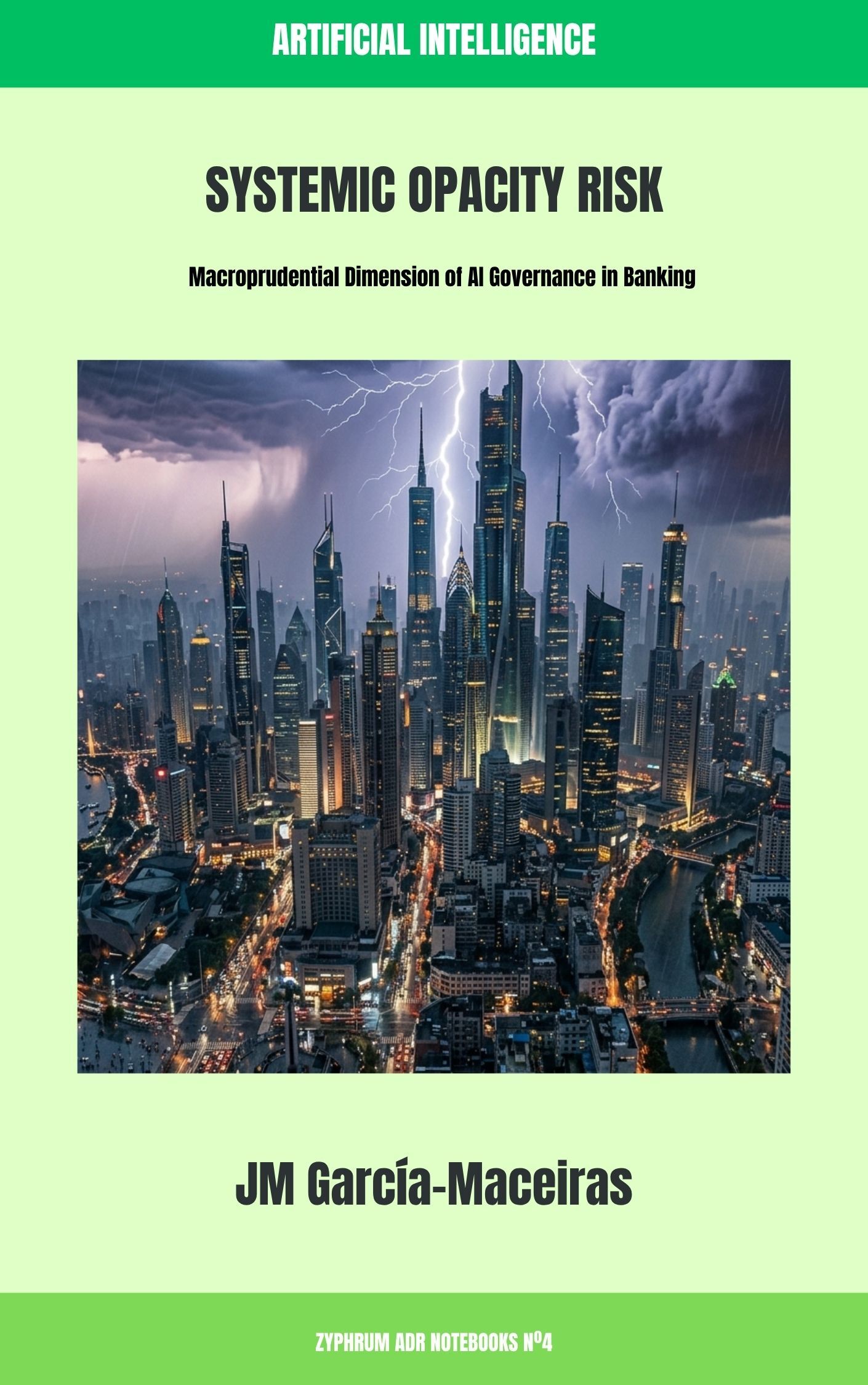

New working papers introduces the concept of “reconstructibility” as a governance condition for accountability in high-risk financial AI systems
MADRID, MADRID, SPAIN, June 2, 2026 /EINPresswire.com/ -- As artificial intelligence becomes increasingly embedded in banking operations — from credit scoring and fraud detection to customer risk classification — under increasing regulatory scrutiny, a deeper governance question is beginning to emerge: can institutions fully defend decisions produced by highly opaque AI systems?
A new series of working papers on AI governance in banking argues that the challenge may extend beyond explainability alone. The papers introduce the concept of reconstructibility, defined as the institutional capacity to recover the causal chain linking data, models, and outcomes to attributable responsibility when decisions are challenged.
The research, starting with the monograph The Banking Risk of AI Explanation, suggests that, in high-risk environments, explainability may not be sufficient if institutions cannot reliably reconstruct how a specific outcome was produced and under whose responsibility it ultimately falls.
The framework includes:
The Five Beacons Model [5B]
Tolerance for Opacity [TfO]
Systemic Opacity Risk [SOR]
The HRAIS Chamber
According to the papers, AI systems may satisfy performance metrics, pass validation procedures, and remain formally compliant, while still creating vulnerabilities when institutions must defend individual decisions before customers, regulators, auditors, or courts.
In those situations, the issue is no longer limited to whether the system functioned correctly, but whether the institution can demonstrate — in a coherent and attributable manner — how the outcome was generated.
The papers argue that where reconstructibility weakens, institutions may experience a practical erosion of decision ownership, including shifts in evidentiary burden, external reassignment of responsibility, and reduced institutional control under scrutiny.
Rather than focusing exclusively on ex post explanations, the proposed governance approach emphasizes upstream traceability, attribution structures, and evidentiary coherence at the design and deployment stages of high-risk AI systems.
While the framework remains at an early stage of development, the papers contribute to ongoing discussions surrounding AI governance, accountability, and operational risk within regulated and supervisory financial environments.
The research is part of a broader effort to define governance frameworks for explainable and accountable AI in banking and financial services.
The working papers, emerging from ongoing independent research, are available through public repositories and aim to contribute to the ongoing debate on AI accountability in regulated environments.
About the Author
Among other positions, JM García-Maceiras is President of the Spanish BPO Banking Association and Vice Chairman of AI Judiciary, an international think tank focused on AI applied to the legal domain.
Supporting Papers
• The Banking Risk of AI Explanation (2026) https://play.google.com/store/books/details?id=rgmkEQAAQBAJ
• The Five Beacons Model [5B] (2026) https://zenodo.org/records/18647318
• Tolerance for Opacity [TfO] (2026) https://zenodo.org/records/19144304
• Systemic Opacity Risk [SOR] (2026) https://zenodo.org/records/20109302
• The HRAIS Chamber (2026) https://zenodo.org/records/19787461
JULIO-MARCOS GARCÍA MACEIRAS
AEPROSER
email us here
Legal Disclaimer:
EIN Presswire provides this news content "as is" without warranty of any kind. We do not accept any responsibility or liability for the accuracy, content, images, videos, licenses, completeness, legality, or reliability of the information contained in this article. If you have any complaints or copyright issues related to this article, kindly contact the author above.
